Ketuta Alexi-Meskhishvili at Galerie Molitor
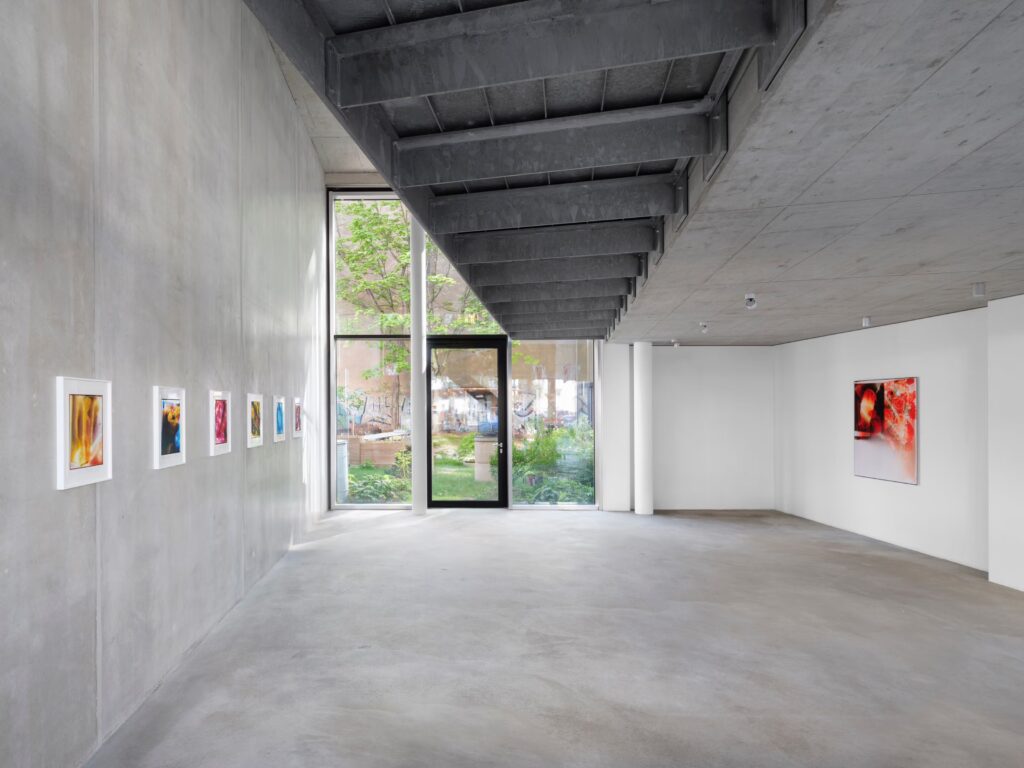
There is something striking in Ketuta Alexi-Meskhishvili’s radiant colors and the ambiguity of her fragmented images, suspended between clarity and abstraction. Among the first spaces visited, Galerie Molitor presents Georgia, the second solo exhibition by the Georgian-American artist. Continuing her exploration of photography as an unstable, process-based medium, the exhibition features new pieces of C-prints created through her ‘camera-less’ practice, which merges digital and analogue techniques. Using collage, manipulated Instagram screenshots, and light exposure, the works navigate between chance and control. Downstairs, table-shaped standing frames display aluminum dye-sublimations, contrasting permanence with the fragility of the prints above. Floral motifs and a recurring female form reference Alexi-Meskhishvili’s recent genealogical discovery of a relative named Georgia, evoking an unknown presence.
On view until June 19, 2026
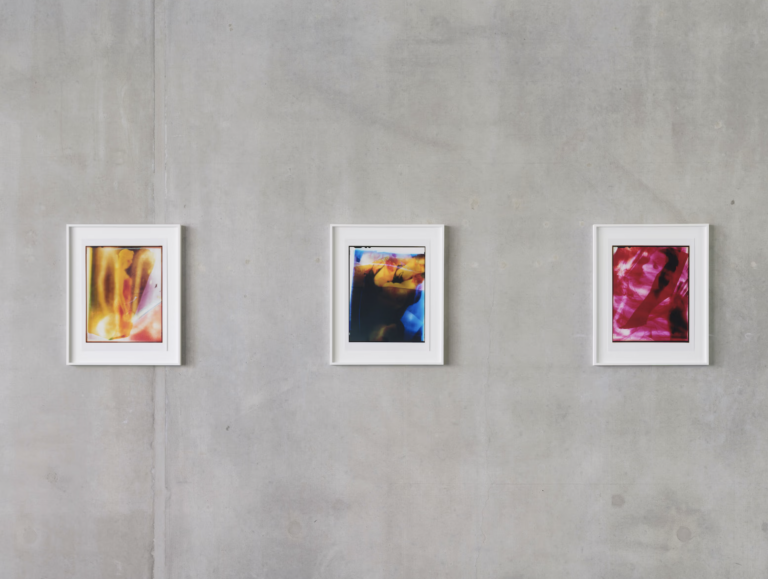
Ketuta Alexi-Meskhishvili, Georgia. Courtesy of the artist and Galerie Molitor.
Petrit Halilaj at ChertLüdde
ChertLüdde’s presentation of Petrit Halilaj’s Who does the earth belong to while painting the wind?! expands beyond the gallery format: teapots in the front window and, inside, Kosovar Albanian kilim rugs, books, and tambourines create a welcoming atmosphere. The exhibition embeds lived history – the Kosovo War, displacement, and ongoing Serbia–Kosovo tensions, evoked through vandalized and burned containers, destroyed opera sets, and reconstructed scenography linked to Halilaj’s Syrigana (2025) production. Yet the show resists becoming merely a record of loss. Fragile materials, sculptural tails, ashen blackbirds, pears, and paintings weave the artist’s personal history into gestures of resistance. Its political force lies in transformation and repair, where narratives are not resolved but reshaped, refusing to vanish into ashes. Unfolding alongside Halilaj’s institutional exhibition at Hamburger Bahnhof, the gallery show offers a valuable space to reflect on, celebrate, and engage with Kosovo’s culture and complex history.
On view until July 25, 2026
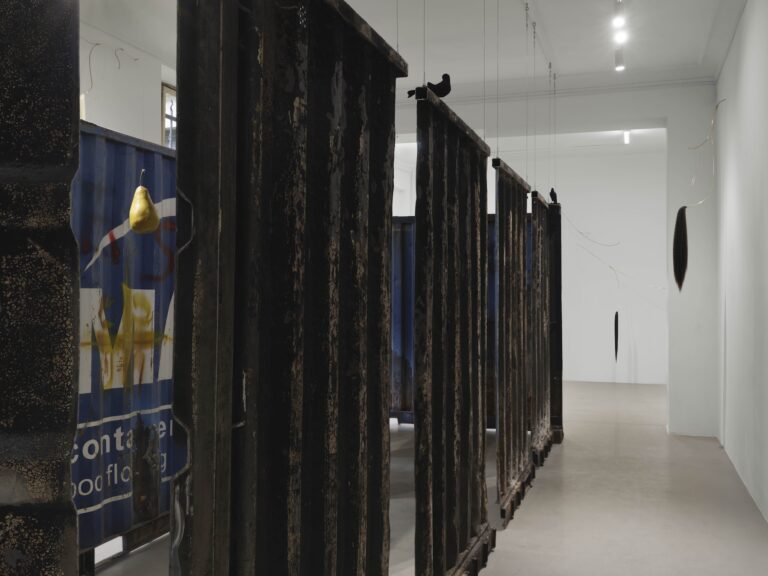
Petrit Halilaj, Installation view of Who does the earth belong to while painting the wind?!, ChertLüdde, Berlin, 2026. Photo © Marjorie Brunet Plaza. Courtesy of ChertLüdde, Berlin and Petrit Halilaj
Yuji Agematsu At Galerie Buchholz
Entering Galerie Buchholz in Berlin’s former West, the small, carefully composed works initially appear as delicate sculptural objects. Only on closer inspection does it become clear that their material is far more humble: the everyday detritus of urban life. The exhibition marks the first part of a two-part presentation of Japanese artist Yuji Agematsu. His works consist of debris collected during daily walks through New York, arranged inside the cellophane of cigarette packets and titled Zips. Agematsu has repeated this practice every day since 1996, as noted in the exhibition text. What at first may evoke either disappointment or fascination gradually settles into recognition: urban waste is not so much elevated as carefully observed, held in a form that renders its fragility and randomness newly visible. It quickly becomes apparent that I have never encountered everyday waste arranged with such attentiveness before.
On view until June 20, 2026
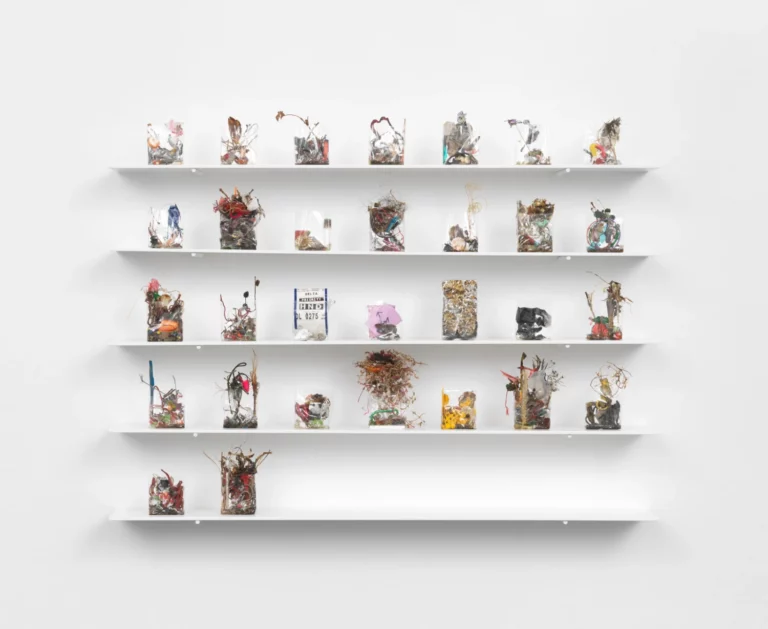
Yuji Agematsu, Zip: 01-01-2024 – 12-31-2024, © Galerie Buchholz
Tracey Emin at Galerie Max Hetzler, part of the group exhibition The Self Assessed
In The Self Assessed, the group show at Galerie Max Hetzler, Tracey Emin’s work is positioned within a broad survey of self-portraiture as a psychological exposure. Against more distanced approaches to identity construction – such as the conceptually mediated self-representations associated with artists like Cindy Sherman or Bruce Nauman in the exhibition – Emin’s work is read as emphasizing immediacy and autobiographical directness. Emin remains committed to intimacy and emotional intensity. This is evident in works such as We Sit Together (2025) and Why I Never Became a Dancer (1995), where autobiographical narration and imagery of Margate fold memory into lived adolescent experience. Across her works presented, identity is not fixed but continually re-formed through recollection, power relations, shame, and desire. Tracey Emin’s self-revelation and vulnerability contribute to the perceived authenticity of her work. It is quite empowering to see her dancing at the end of the film, as she returns to her long-held yearning.
On view until May 30, 2026
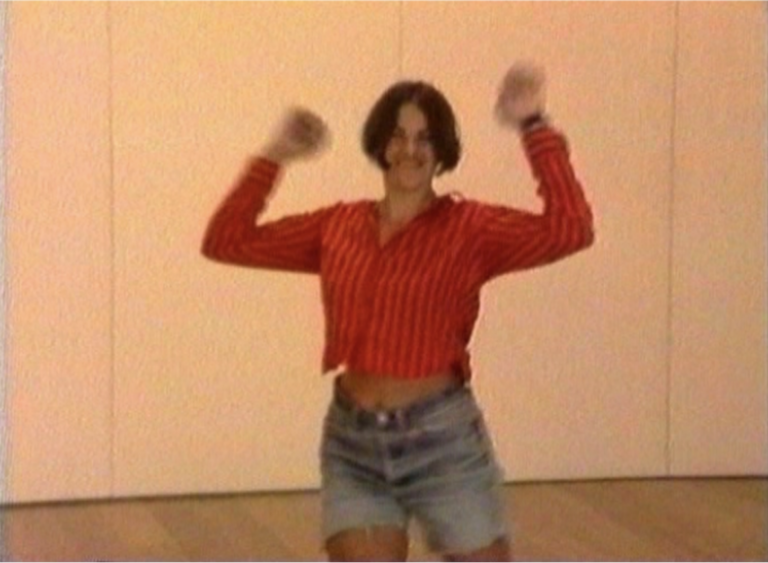
Tracey Emin, Why I Never Became a Dancer, 1995. Courtesy of Galerie Max Hetzler
Daniel Buren at Konrad Fischer
Konrad Fischer Galerie, located in the city’s central district, alongside its spaces in Düsseldorf and New York, has long been known for exhibiting minimal and conceptual art. Daniel Buren’s current exhibition Trois en un, Hauts-reliefs, Travaux situés, extends his familiar site-specific stripe system from the 1960s into a large-scale mirrored installations that turns the gallery into a shifting optical field. The reflections multiply his bands, drawing viewers into the work while also dissolving spatial certainty. The viewer is not positioned in front of the work but absorbed into its logic of serial repetition and optical feedback, reinforcing Buren’s persistent claim that art cannot be detached from its conditions of appearance, surrounding space, and institutional framing. The critique of the “neutral” white cube remains central. While the installation effectively exposes how perception is constructed, it also reiterates a strategy Buren has long refined through institutional reflection.
On view until August 1, 2026
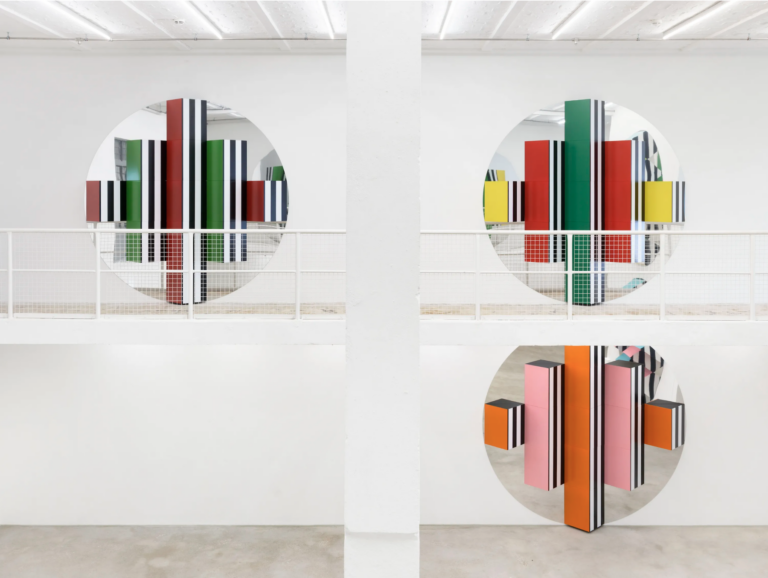
Daniel Buren, courtesy of Konrad Fischer Galerie
Brook Hsu at Kraupa-Tuskany Zeidler
Brook Hsu’s second solo exhibition at Kraupa-Tuskany Zeidler draws on the Barcelona Pavilion, designed by Ludwig Mies van der Rohe and Lilly Reich for the 1929 Barcelona International Exposition. Her ink and pencil drawings, which depict pregnancy and loss through recurring female figures, establish an evocative dialogue between modernist architecture and bodily experience. At times, however, that connection feels elusive. The pavilion’s history of demolition and reconstruction offers a compelling lens through which to consider change and temporality, yet it remains somewhat unclear why this architectural history has been chosen to frame such an intimate subject. The inclusion of Georg Kolbe’s bronze sculpture Nacht (1930) provides a strong reference. The show is most effective in its emotionally charged atmosphere, though some of its conceptual relationships feel only lightly explored. This may stem from a lack of contextual grounding, which the exhibition text unfortunately does not fully provide, leaving the narrative slightly vague.
On view until June 13, 2026
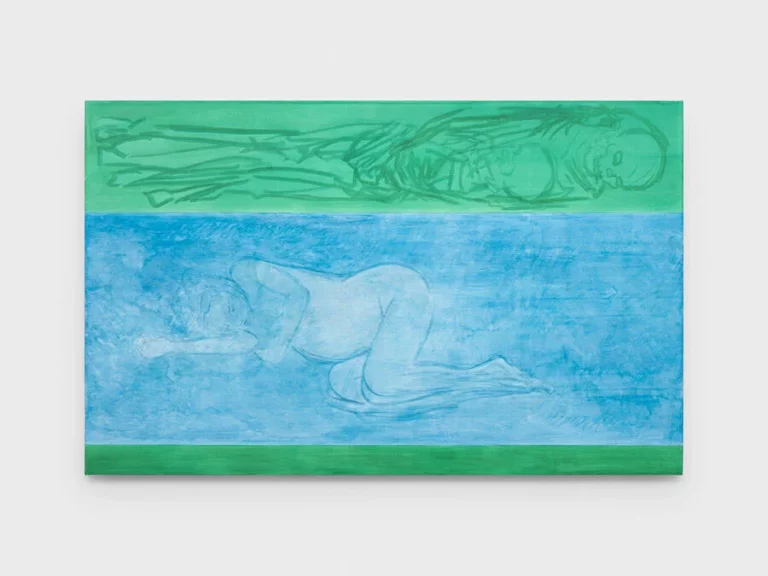
Brook Hsu, Hope, 2026. Photo © Julian Blum. Courtesy of the artist and Kraupa-Tuskany Zeidler
Shinoh Nam at Mountains
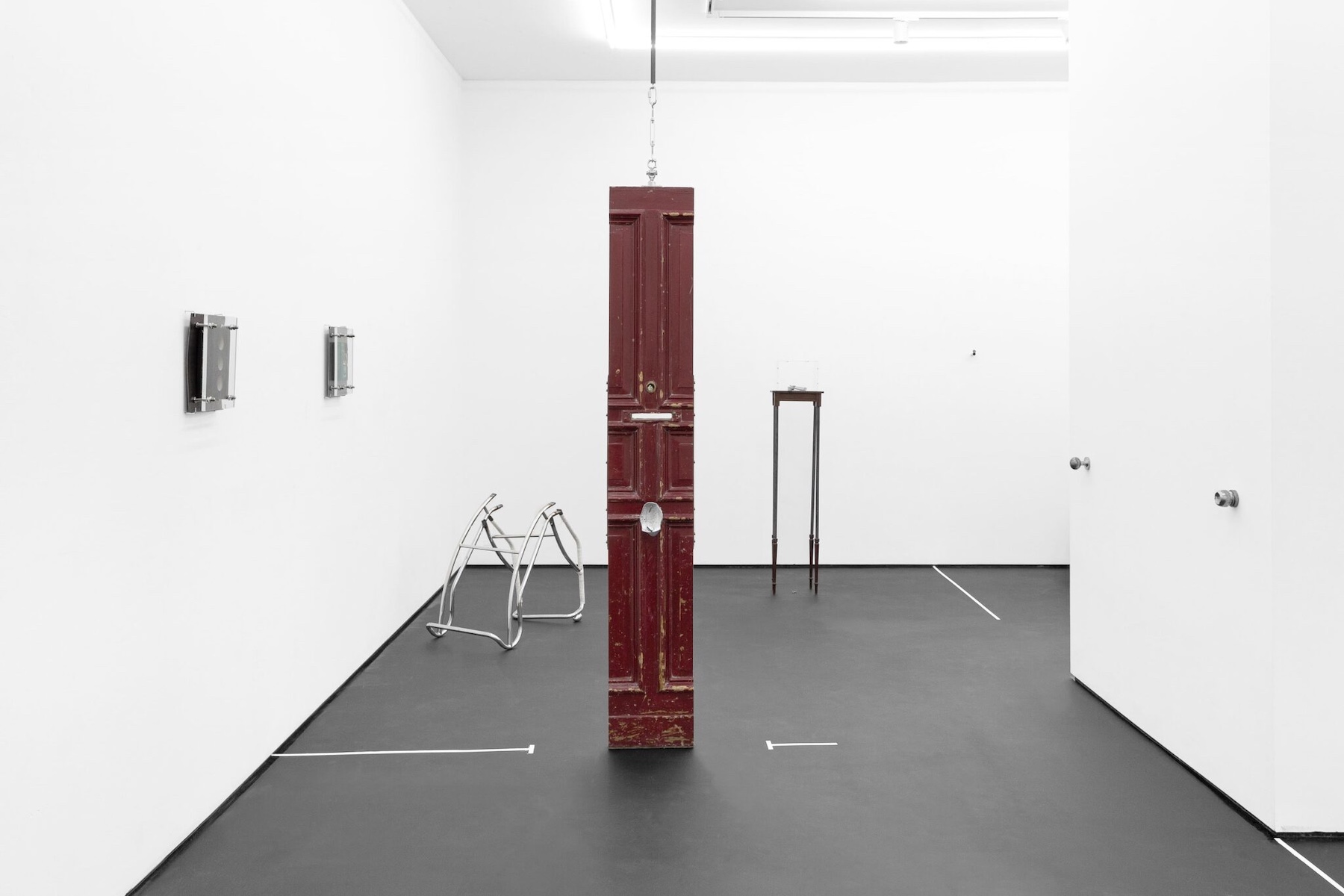
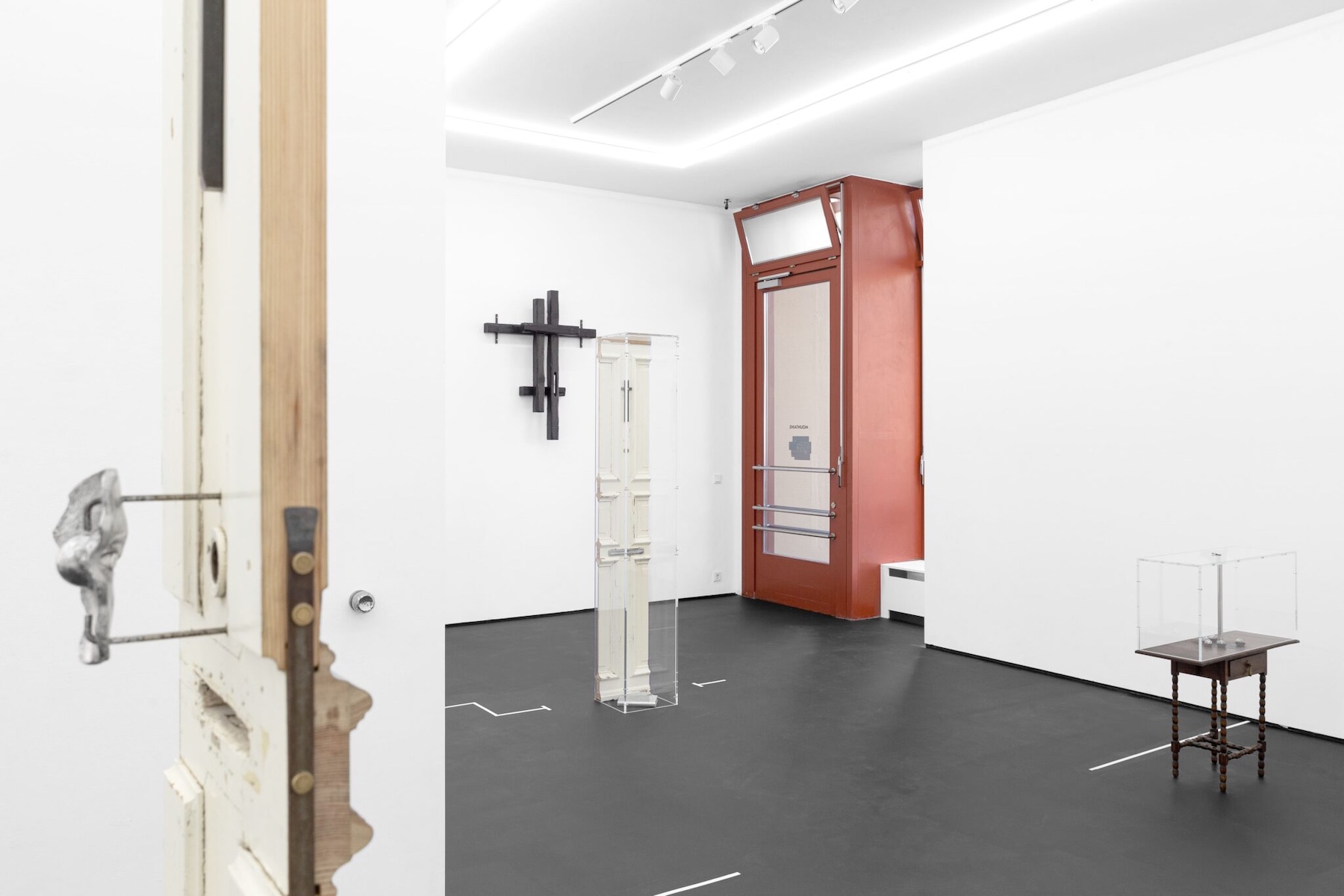
After a long day, Shinoh Nam’s exhibition A Guide to the Interior for a House on Ambiguous Grounds, developed in collaboration with architect Changki Kim at Mountains, stands out. Reflecting on the contradictions of progress, the exhibition unfolds as a fragmented house suspended between construction and ruin, assembling steel, wood, and glass into remnants of unfinished models and architectural afterimages. References to the Le Corbusier chair, the schematic floor plan of Dogville(2003), and fragments of doors introduce crossings, thresholds, and concealed elements, evoking a spatial logic in which architecture is reduced to partial signs. These arrangements carry a quiet sense of mystery and phenomenological depth, recalling Gaston Bachelard’s poetics of interiority. I also think of Robert Smithson’s notion of the building as a ruin in reverse. There is a quiet persistence in how the works hold themselves open, resisting closure, even as their language of fragmentation invites familiarity.
On view until June 13, 2026
Installation view of Shinoh Nam, A Guide to the Interior for a House on Ambiguous Grounds, Mountains. Photo © Julie Becquart.